 Blue Monkey Plumbing
Blue Monkey Plumbing
Blue Monkey Plumbing
Store roof rainwater for approved outdoor use without making your property look like a utility yard.
Blue Monkey Plumbing designs and installs custom rainwater storage systems as part of our residential plumbing services for West Vancouver homeowners who want practical non-potable water storage without compromising the appearance, privacy, or value of their property.
These systems collect rainwater from the roof, store it in a tank or underground cistern, and make it available later through a dedicated outdoor tap, hose connection, or approved non-potable watering point.
This type of work fits within our utility room and whole-home plumbing services because it involves roof runoff, storage, outdoor water access, overflow planning, and property-level water management.
For many West Vancouver homes, the problem is not whether rainwater storage is useful. The problem is how to add storage without spoiling the look of the home, the garden, or the outdoor living space.
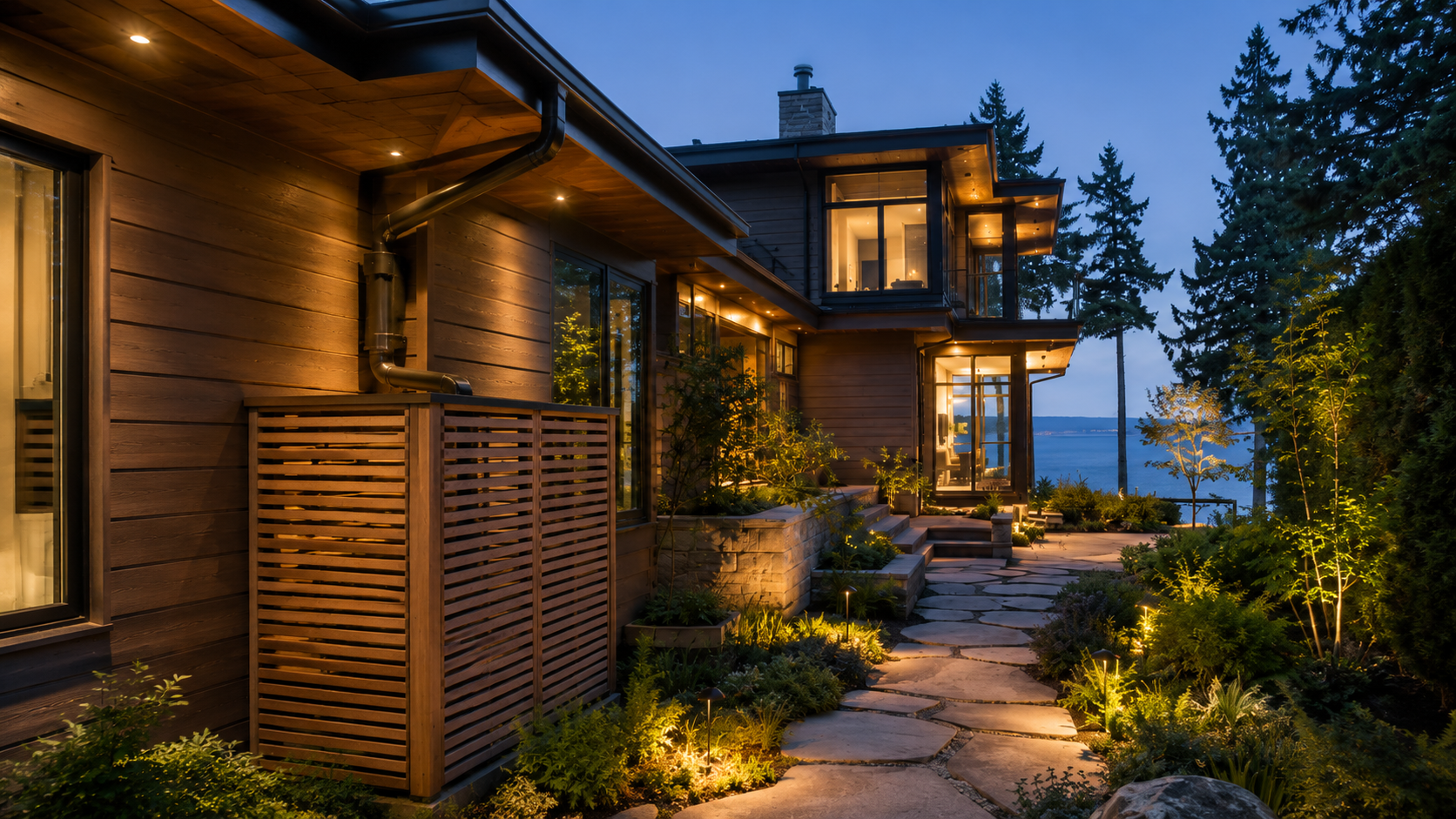
A large plastic tank beside a beautiful home can look wrong immediately. The storage location, screening, downpipe connection, and access point need to be planned so the system feels intentional, not dumped beside the house.
The system should not feel complicated. Where suitable, stored rainwater can be made available through a dedicated outdoor tap or hose point, so using it feels familiar and easy.
Mature trees, hedges, gardens, and planting beds are part of the value and privacy of the property. Rainwater storage can support a more resilient outdoor water plan during drier periods.
Most homeowners do not want a complicated water management system. They want stored water to be easy to access when it is needed.
Depending on the design, a rainwater storage system can be set up with a dedicated outdoor tap, hose connection, or approved non-potable watering point.
Before recommending a system, the property needs to be reviewed properly so the design makes sense for the home, roof, landscape, and intended use.
The purpose is to avoid a system that looks wrong, is awkward to use, or does not suit the property.
Roof collection area, gutter layout, downpipe locations, overflow routing, and where rainwater can realistically be captured.
Possible tank or cistern locations, visual impact, privacy, screening, enclosures, and access for maintenance.
Outdoor watering points, pump requirements, debris control, mosquito prevention, winterization, and whether other trades are needed.
For many West Vancouver properties, landscaping is a major investment. Gardens, planting beds, hedges, specimen trees, lawns, stonework, and outdoor living spaces often represent years of planning, planting, and maintenance.
For many homeowners, this is not simply about storing water. It is about protecting the living parts of the property that make the home feel private, established, and valuable.
A residential rainwater storage system captures roof runoff and stores it for approved future non-potable use.
Instead of allowing all rainfall to leave the property through gutters and storm drains, a portion of that water is directed into a rainwater storage tank or underground cistern.
Where pressure control, isolation valves, backflow protection, or water service planning is required, this may overlap with our water pressure and valve services.
Rainwater storage systems are designed as separate non-potable water systems. They are not drinking water systems and are not intended to be connected directly to the home’s potable drinking water supply.
Collected rainwater is not intended for drinking, cooking, food preparation, bathing, or personal consumption.
All uses must comply with applicable regulations, plumbing code requirements, municipal rules, and project-specific requirements.
Rainwater storage does not need to mean a large exposed plastic tank beside the house. For many homes, that would be the wrong solution.
Above-ground tanks can often be placed near the house and integrated behind cedar screening or custom enclosures.
Slimline tanks may suit tighter areas where space is limited or visual impact is a concern.
Underground cisterns can provide larger storage volumes while preserving usable outdoor space and reducing visual impact.
Some projects may integrate storage into landscape designs, utility areas, service corridors, or purpose-built exterior features.
Where underground cisterns, excavation, electrical work, or landscape integration are required, the project may involve coordination with other qualified trades.
The system should be planned for the property you actually have, not for a generic diagram that ignores North Shore weather, trees, drainage, and access.
Rain barrels can be useful for small-scale collection, but they are not the same as a custom rainwater storage system.
A basic rain barrel usually offers limited capacity, limited pressure, limited convenience, and limited integration with the property. It may also be visually wrong for a high-value home where the exterior, landscaping, and privacy screening have been carefully considered.
Blue Monkey Plumbing focuses on properly planned residential rainwater storage systems, not basic DIY rain barrel installations.
Rainwater storage systems can range from relatively straightforward above-ground installations to highly customized systems involving storage tanks, underground cisterns, pumps, controls, filtration, excavation, electrical requirements, architectural screening, and landscape integration.
These systems can represent a significant property investment depending on the size, complexity, and objectives of the project. You can also review how our pricing works before booking.
A rainwater storage system collects rainwater from the roof and stores it in a tank or underground cistern for approved future non-potable use.
Depending on the system design and applicable regulations, stored rainwater may be suitable for approved non-potable uses such as garden watering, landscape watering, watering mature trees, and watering planting beds.
No. Unless specifically designed, treated, tested, and approved for potable use, collected rainwater should be considered non-potable.
No. Rainwater storage systems are intended to operate as separate non-potable water systems. They are not intended to be directly connected to the home’s potable drinking water supply.
A rainwater storage system may provide a separate stored non-potable water source for approved uses. Homeowners must always comply with current municipal rules, regulations, and watering restrictions.
Many systems can be designed with a dedicated outdoor tap, hose connection, or watering point. The exact setup depends on the tank location, pump requirements, intended use, and applicable requirements.
Often, yes. Architectural screening, landscaping, custom enclosures, timber screening, and underground cisterns may help reduce visual impact.
It should not. The whole point of an architecturally integrated system is to plan the tank or cistern location, screening, access, and appearance so the system suits the property rather than looking like an afterthought.
Rain barrels can collect small amounts of rainwater. Larger rainwater storage systems are designed for homeowners seeking greater storage capacity, better convenience, improved appearance, overflow management, pumps, filtration, and a more permanent long-term solution.
Blue Monkey Plumbing focuses on properly planned residential rainwater storage systems rather than basic DIY rain barrel installations.
Underground cisterns can provide larger storage volumes while preserving usable yard space and minimizing visual impact. They may be especially suitable for new construction, major renovations, estate properties, and larger landscape projects.
Winter operation depends on the system design. Some systems may be operated seasonally and winterized, while others may include design features intended for year-round use. Exposed pipes, pumps, taps, and fittings should be considered carefully in freezing conditions.
Organic debris from roofs, gutters, and surrounding trees should be considered during system design. Filtration, screening, first-flush diversion, and debris management can play an important role in long-term system performance.
Yes. Like any property system, periodic inspection and maintenance may be required depending on the system design, site conditions, debris load, pump setup, and operating requirements.
Every property is different. Storage volume, site conditions, underground or above-ground installation, pumps, controls, filtration, excavation, electrical requirements, overflow management, and architectural integration can all affect the overall investment.
Blue Monkey Plumbing can help review your collection potential, storage options, tank or cistern placement, outdoor watering needs, privacy concerns, architectural integration options, and intended non-potable water applications. You can also contact Blue Monkey Plumbing if you have questions before booking.
Serving homeowners throughout West Vancouver, North Vancouver, Lions Bay, and the North Shore.